
 العربية
 Русский
 اردو
اردو
 中文
中文
 Français
Judicial Authority for Dispute Resolution in Dubai
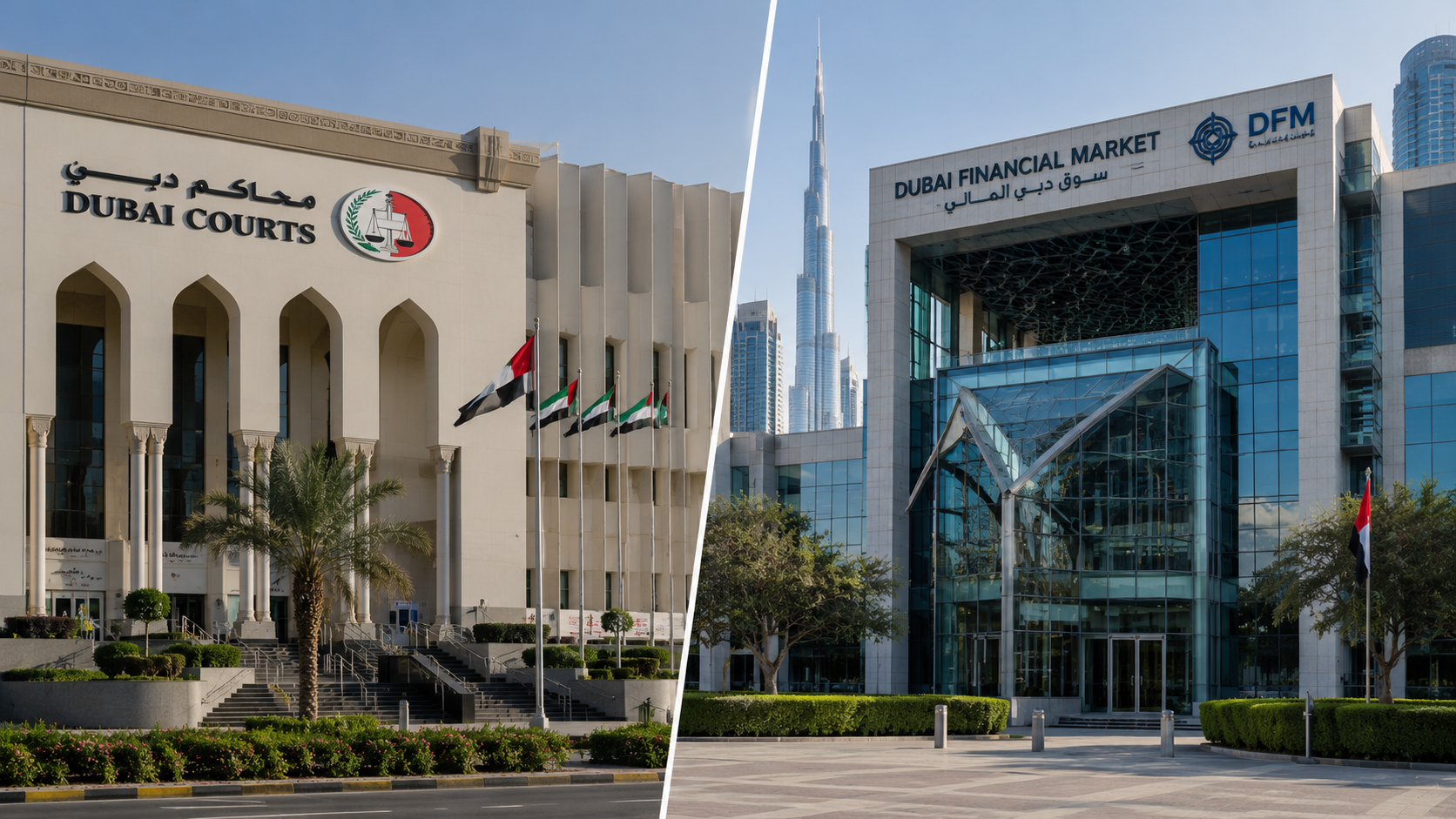
The Judicial Authority for Resolving Conflicts of Jurisdiction between the Courts of the Dubai International Financial Centre (DIFC) and the Judicial Bodies in the Emirate of Dubai is an independent judicial authority. It is competent to determine the judicial body with jurisdiction when a conflict of jurisdiction arises between the DIFC Courts and any of the judicial bodies in the Emirate, and to determine the judgment to be enforced where conflicting judgments are rendered in the same dispute. Contrary to what may be assumed, this Authority was not originally created by Decree No. (29) of 2026; rather, it was first formed under Decree No. (19) of 2016. Decree No. (29) of 2024 was then issued by His Highness Sheikh Mohammed bin Rashid Al Maktoum, Vice-President and Prime Minister of the UAE and Ruler of the Emirate of Dubai, to replace the previous decree, reorganise the Authority's work, and broaden the scope of its jurisdiction and supervisory powers. Its decisions are final and binding on all relevant judicial bodies.
What is the Judicial Authority for Resolving Conflicts of Jurisdiction in Dubai, and how does it settle jurisdictional conflicts between the DIFC Courts and the Dubai Courts?
1- What is meant by a conflict of jurisdiction?
A conflict of jurisdiction is the situation in which a dispute arises over which judicial body has authority to hear a particular case. The conflict may be positive, where more than one body asserts its jurisdiction to hear the same case, or negative, where every body declines to hear it, leaving the litigant without a judge to resolve the dispute.
This issue is especially sensitive in the Emirate of Dubai because of the multiplicity of judicial systems within it, where the Dubai Courts operating under civil law run in parallel with the DIFC Courts, which operate under the common law system and in English. This makes determining the competent court in certain disputes with a financial or commercial element a delicate matter that requires a body capable of settling it conclusively.
2- Establishment of the Authority: from Decree No. (19) of 2016 to Decree No. (29) of 2024
The Authority was first formed under Decree No. (19) of 2016, under the title "The Judicial Authority of the Dubai Courts and the DIFC Courts," to serve as the decisive reference for conflicts of jurisdiction between the two systems. Decree No. (29) of 2024 was then issued to replace Decree No. (19) of 2016 and to amend the Authority's title to "The Judicial Authority for Resolving Conflicts of Jurisdiction between the Courts of the DIFC and the Judicial Bodies in the Emirate of Dubai," wherever it appears in any legislation in force in the Emirate.
The new decree was not limited to changing the title; it refocused the Authority's mandate to be the exclusive final judicial authority in conflict-of-jurisdiction matters, while broadening the scope of bodies subject to its jurisdiction and supervisory powers. Nevertheless, decisions issued in implementation of Decree No. (19) of 2016 remain in force to the extent that they do not conflict with the new decree, until they are superseded.
3- The Authority's competences and functions
Under Decree No. (29) of 2024, the Authority undertakes specific functions, the most notable of which are:
4- Which judicial bodies fall within the Authority's jurisdiction?
One of the most significant features of Decree No. (29) of 2024 is the expansion of the definition of "judicial bodies" in the Emirate of Dubai, so that the Authority's jurisdiction is no longer limited to conflicts between the DIFC Courts and the Dubai Courts alone. These bodies include:
With this expansion, the Authority has become the unified reference for resolving conflicts, whatever the judicial body involved.
5- Composition of the Judicial Authority
The decree provides that the Authority be composed of mixed representation of both judicial systems, as follows:
This mixed composition ensures that both judicial systems are represented together when resolving the conflict.
6- How are applications submitted to the Authority?
Where a conflict of jurisdiction exists — whether no body has declined to hear the case, all of them have declined, or conflicting judgments have been rendered — an application to determine the competent body or the judgment to be enforced is submitted to the Authority by way of a petition filed by any of the litigants or by the Public Prosecution. The Authority's deliberations are confidential, and its decision must be reasoned.
The regulatory framework has set out the mechanisms for convening sessions, for the Authority to be seised of the application and decide it, the resulting effects, the payment of the prescribed security deposit, and the handling of applications not yet decided at the time the new decree came into force.
7- Time limits, stay of proceedings, and the binding force of the decision
Among the most notable procedural rules established by Decree No. (29) of 2024 are those concerning the time limits for deciding and the stay of proceedings:
Filing the application does not automatically stay the Authority's proceedings; however, any party may submit a request to stay the proceedings. The Authority's decisions are final and binding, as the DIFC Courts and all other judicial bodies are bound by its determination of the competent body or the judgment to be enforced.
8- Practical importance for companies and contracting parties
The Authority is of considerable practical importance to contracting parties and companies operating in Dubai, particularly when drafting jurisdiction clauses or arbitration provisions in contracts and in companies' articles of association. Choosing the jurisdiction of the DIFC Courts or another judicial body without clear wording agreed by all parties may open the door to a dispute over jurisdiction that is referred to the Authority.
Clarity of the jurisdiction clause in the contract, and determining the competent body in advance, therefore reduce the risks of parallel litigation and conflicting judgments, saving the parties time and cost. It is prudent to consult a specialised lawyer before signing contracts with a financial or international element, in order to determine the most appropriate judicial body and to draft the relevant clauses precisely.
Frequently Asked Questions
Our Legal Services in Dubai
AWADH ALMHEIRI LAW FIRM AND LEGAL CONSULTATIONS provides comprehensive services in the Emirate of Dubai in disputes of a financial, commercial, and international nature, in determining judicial jurisdiction between the Dubai Courts and the DIFC Courts, in preparing applications before the Judicial Authority for Resolving Conflicts of Jurisdiction, in drafting jurisdiction and arbitration clauses in contracts, and in representing clients before the various levels of litigation and the dispute-resolution centres in the Emirate.
Our Services Across the Other Emirates
The firm's services extend to its clients across the various Emirates of the country, from Abu Dhabi, Sharjah, and Ajman to Umm Al Quwain, Ras Al Khaimah, and Fujairah, where we keep pace with developments in federal and local legislation governing judicial jurisdiction and the enforcement of judgments. We provide legal advice and representation in civil, commercial, administrative, and criminal cases, safeguarding our clients' rights wherever they are within the United Arab Emirates.